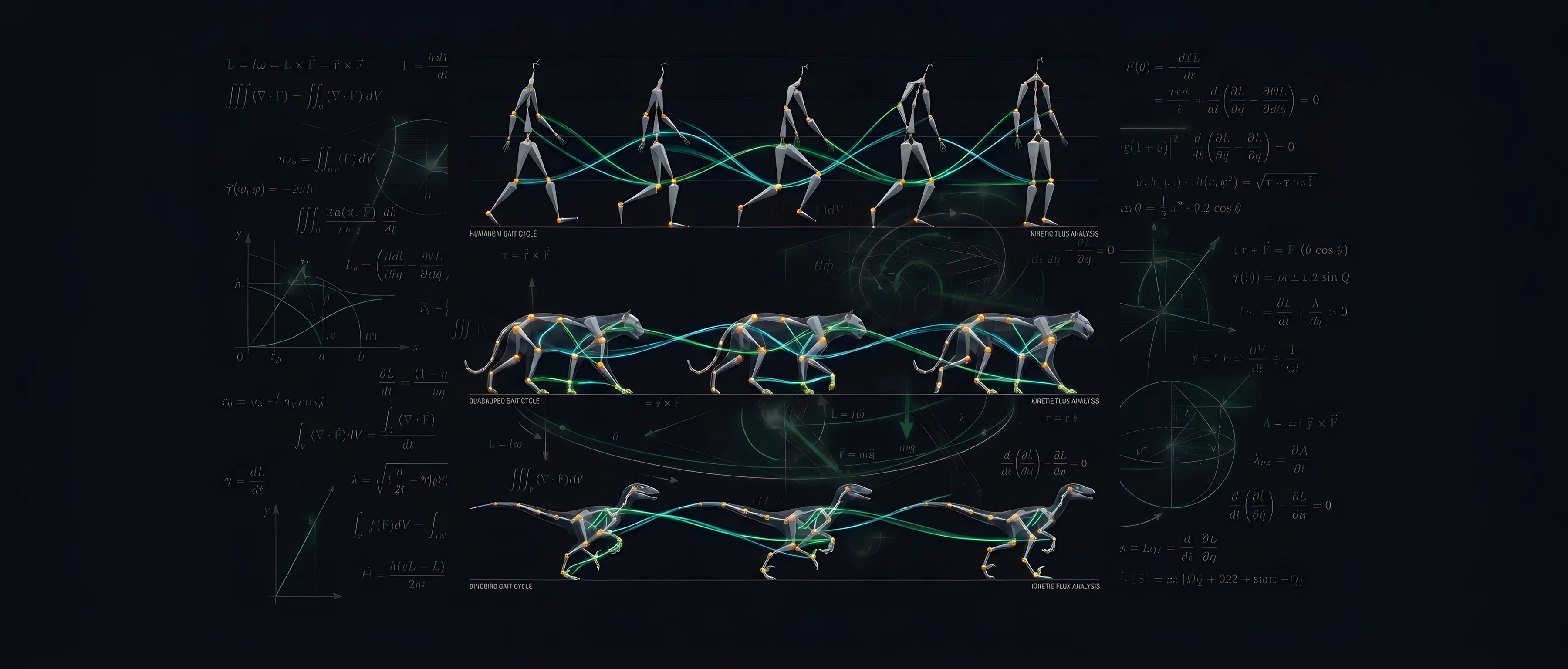
Xarkin in motion: Parameterized Universal Motion Models
How motion engineering and automation changes the retargeting conversation.
If you’ve spent any time in animation pipelines, games, robotics, or simulation environments, you know the "retargeting tax." You get a fantastic set of motion data, only to spend countless hours tweaking, adjusting, and re-baking it to fit slightly different characters, speeds, or terrain requirements.
At Xarkin, we think it’s time to move past rigid, static clips and change the retargeting conversation entirely.
With the release of Xarkin Motion 2, we introduced fully parameterized universal motion models alongside Xarkin Motion Script—a specialized markup language for creating physics-based pose data.
So, how does this transform your pipeline?
Universal Models: One Skeleton Topology, Infinite Coverage
A motion model is a generative design for a specific movement—such as a walk, run, or pose. A Universal Motion Model scales that design across an entire skeletal topology, including humanoids, quadruped variants, dinosaurs, or custom robotic setups.
Instead of managing individual assets per character size or proportion, a single universal model generates motion automatically for any character that shares the base topology. One model fits all.
Xarkin Universal Motion Models
A brief clip showing the result of a single model being applied to three different characters.
Parameterization: Beyond the Static Clip
A walk is rarely just a walk. In production, movement needs to adapt dynamically—faster, slower, uphill, weary, aggressive, or turning sharply.
Historically, achieving this meant bloated clip libraries, complex blend trees, and heavy manual cleanup. Parameterization changes this. Instead of a fixed animation file, a Parameterized Universal Motion Model represents a continuous spectrum of motion possibilities.
For example: A "weary walk" isn't achieved through a separate clip, but by tuning parameters in real time—adjusting velocity and cadence while lowering the head, sagging the shoulders, and widening foot stance.
Xarkin models have parameters.
A short clip showing how a single model can be altered to accomplish a specific required motion.
Xarkin Motion Script: The Engine of Motion Engineering
To harness these parameters, we created Xarkin Motion Script—a powerful markup language processed by the Xarkin Motion Server to generate precise, physics-based pose data.
Using Motion Script, animators and programmers can specify parameter-driven instances of motion models, which we refer to as Motion Elements. These elements can be flexibly combined into complex, highly reusable motion sequences—giving rise to true motion engineering.
How It Works: Motion Requests in Action
When sending a request to the Xarkin Motion Server, you don't just send raw animation sequences. You pass a complete, context-aware package:
Character Topology & Mass Profiles: Maps the movement directly to the character’s physical structure and mass distribution.
Environment Variables: Defines real-world conditions like target frame counts or gravity settings.
Motion Context: Passes the character’s current dynamic state to guarantee seamless transitions into the next action.
The 3-Step Generation Process
Pose Generation: The server creates initial parameter-driven pose data.
Simulation Pass: The motion is passed through a simulator to verify physical accuracy.
Physics Integration: Ground contact, balance, and center-of-mass physics are applied directly to the final pose output.
What This Means for Your Production
When you combine universal topology coverage with parameter-driven models, the math of producing motion changes drastically. We aren’t talking about incremental 10% or 20% efficiency gains—we are looking at orders of magnitude improvement in motion reuse.
🎨 Greater Artistic Expression
Animators and technical directors no longer need to manually tweak assets to prevent foot-sliding or loss of balance. Because the underlying model handles structural and physical validity, creators can focus purely on art-directing performances without breaking the rig.
⏱️ Compressed Timelines
By eliminating massive blend trees and static clip libraries, integration time drops significantly. Tech leads and motion designers can deploy core movement mechanics across entire character rosters in a fraction of the time.
📉 Dramatically Reduced Costs
Fewer motion capture sessions, vastly reduced storage footprints, and minimal manual cleanup directly lower the total cost of ownership per asset.
Ready to elevate your motion pipeline?
Whether you're scaling character suites in AAA games or driving physical simulation in robotics, Xarkin Motion 2 provides the tools to automate the tedious and engineer the extraordinary. [Contact our team today to learn more.]
Major platform update helps animators, programmers, and production teams create a broader range of motion with greater control in less time.
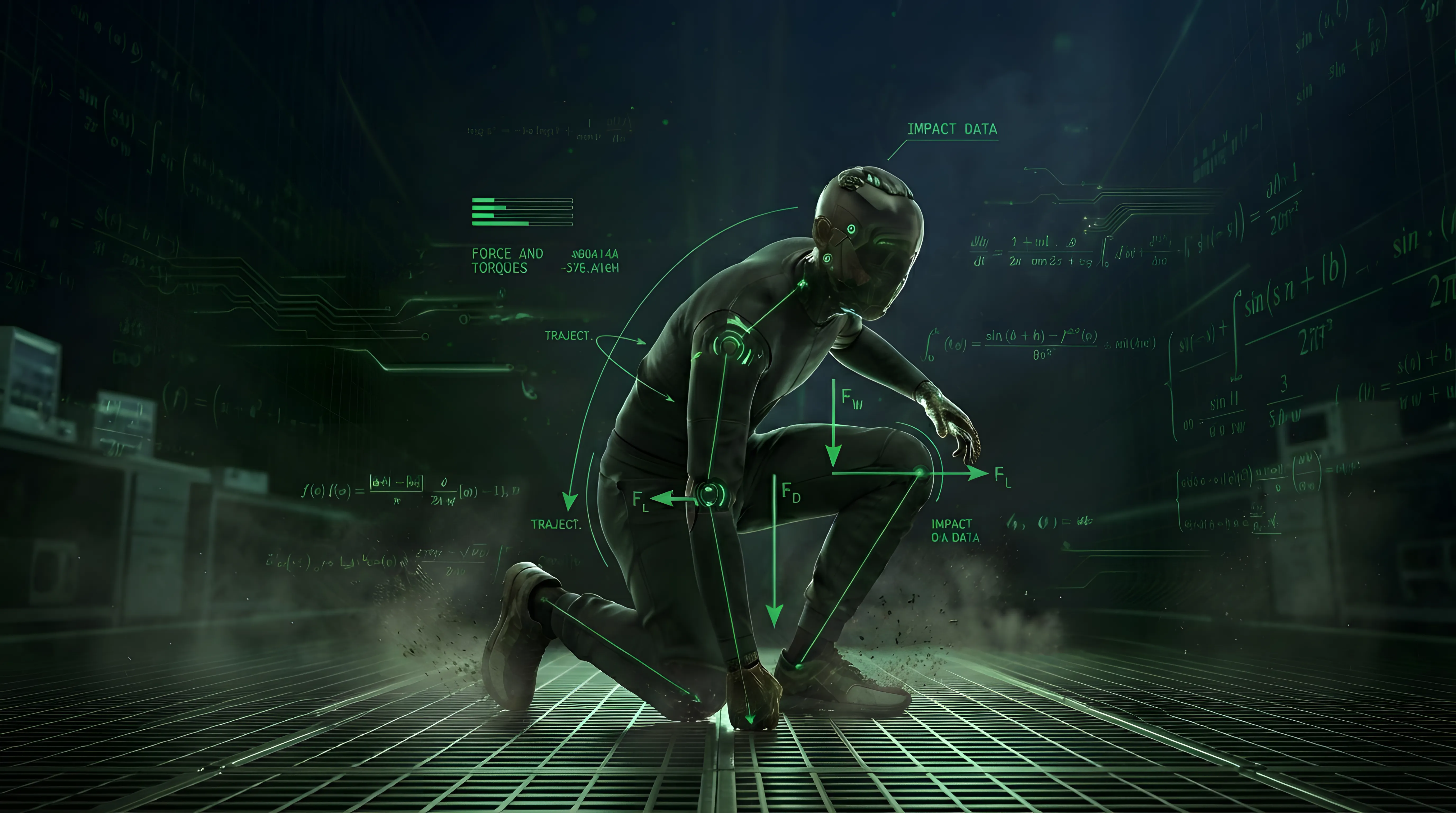
A soon to be released Xarkin Motion Script update, Motion Script will support the naming of support surfaces. Perfect contact | Automated.