Xarkin in motion: Parameterized Universal Motion Models
Author
Andrew Coutts
Date Published

How motion engineering and automation changes the retargeting conversation.
If you’ve spent any time in animation pipelines, games, or simulation environments, you know the retargeting tax. You get a fantastic set of motion data, only to spend countless hours tweaking, adjusting, and retargeting it to fit slightly different characters, speeds, or terrain requirements.
At Xarkin, we think it’s time to move past rigid, static clips and change the retargeting conversation entirely.
To understand how, you need to understand two foundational capabilities of Xarkin’s motion technology: Universal Models and Parameterization.
1. Universal Models: One Skeleton Topology, Infinite Coverage
Traditionally, if you have five characters sharing a similar skeleton or topology, you end up managing, baking, or retargeting motion data across five separate setups.
With Xarkin’s Universal Motion Models, a single model generates motion automatically across any character sharing that underlying topology.
Think of a Universal Model like SVG vs. Raster Graphics: > A standard clip is like a bitmap image—fixed in size, rigid, and prone to breaking when stretched outside its original bounds. A Xarkin Motion Model is vector-based. It mathematically understands the topology, allowing the movement to scale naturally across different character proportions without losing structural integrity or intent.
By solving motion at the model level rather than the clip level, you eliminate the need to endlessly re-bake and store duplicate animations for varying character sizes.
2. Parameterization: Beyond the Static Clip
A walk is rarely just a walk. In production, you need a walk that adapts: faster, slower, uphill, weary, aggressive, or turning sharply.
Historically, achieving this meant large clip libraries, complex blend trees, and heavy manual cleanup. Parameterization changes this.
Instead of a fixed animation file, a Parameterized Motion Model represents a vast continuum of motion possibilities. By adjusting real-time parameters—such as target velocity, stride cadence, pitch, or emotional weight—a single model dynamically outputs the exact motion required.
Major platform update helps animators, programmers, and production teams create a broader range of motion with greater control in less time.
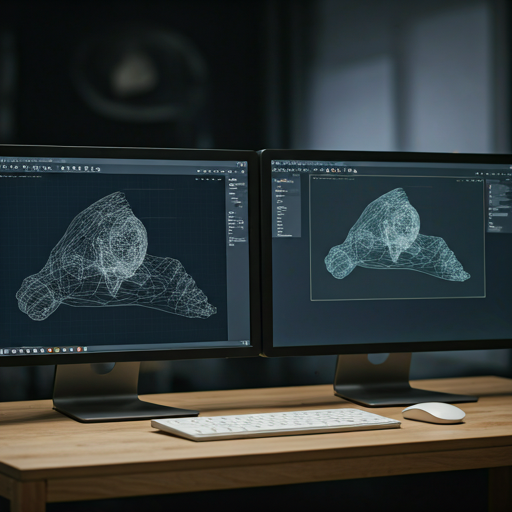
Integrating Xarkin directly into Unreal Engine for dynamic character responses.